
Pillar 2: Medical Device Safety
Medical Device Safety & Chemical Characterization
End-to-end biological safety strategy, ISO 10993-18 chemical characterization, simulated-use study coordination, toxicological risk assessment, and ISO 14971 risk-management linkage.
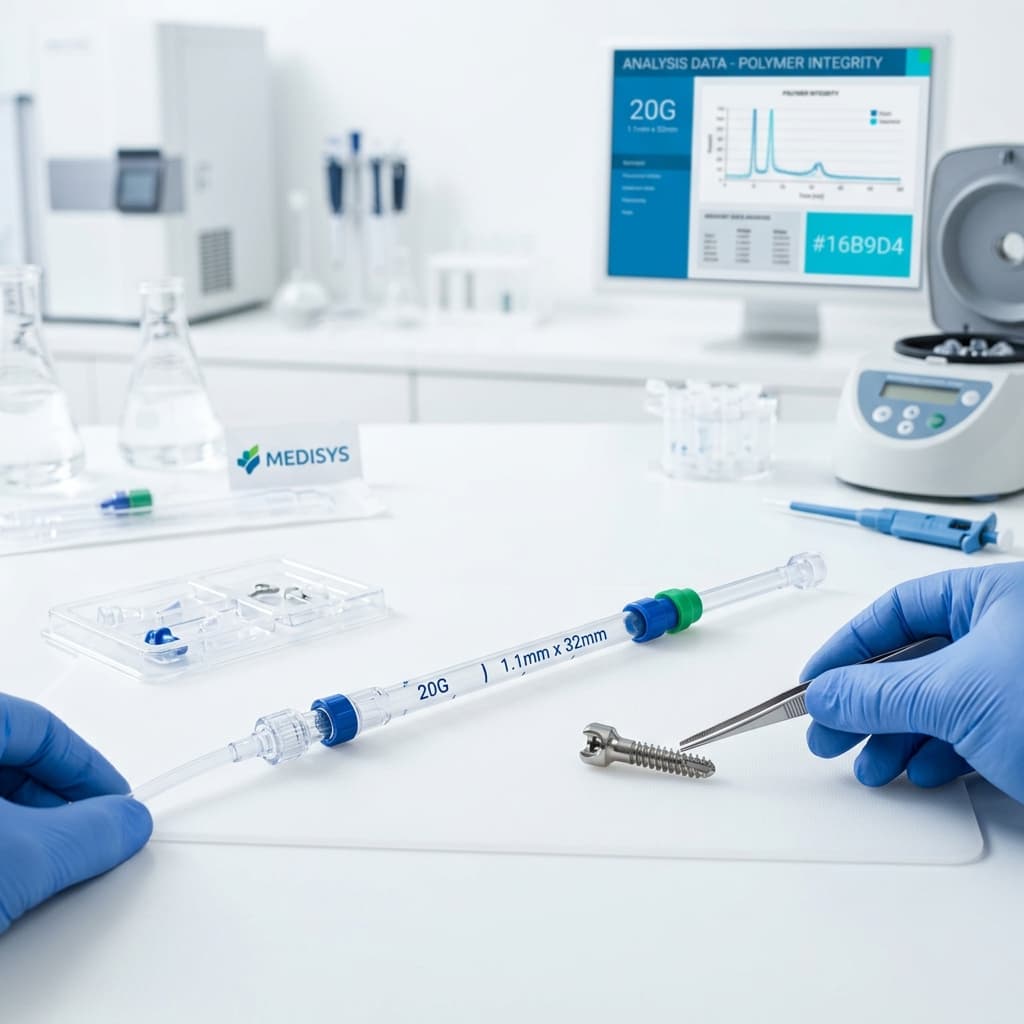
Chemical Characterization Aligned with ISO 10993 & ISO 14971
Demonstrating the biological safety of medical devices requires a structured, science-driven pathway. Modern global regulatory bodies (including US FDA, EU Notified Bodies, and PMDA) mandate that biological evaluation starts with a thorough understanding of device materials and chemical characterization before initiating unnecessary animal testing.
At SG Pharma Solutions, we provide high-level technical consultancy and coordination throughout the biological evaluation lifecycle. We establish the Biological Evaluation Plan (BEP), define extraction rationales per ISO 10993-18, coordinate physical analytical testing through qualified partner laboratories, conduct toxicological risk assessments per ISO 10993-17, and synthesize the findings into a defensible Biological Evaluation Report (BER) directly linked to your ISO 14971 risk management file.
Relevant Device Applications
Implants
Long-term and permanent implantable devices requiring exhaustive chemical extraction and toxicological risk assessment.
Catheters & Vascular Access
Circulating blood-contacting devices with strict hemocompatibility and chemical leaching considerations.
Patient-Contacting Devices
Short-term, transient, and prolonged contact medical devices per ISO 10993-1 categorized endpoints.
Drug-Device Combination Products
Cross-boundary delivery devices combining pharmaceutical API compatibility with medical device mechanical safety.
Drug-Delivery Systems
Prefilled syringes, autoinjectors, pen injectors, and nebulizer components.
Medical Device Components & Materials
Raw polymers, elastomers, adhesives, surface coatings, colorants, and metallic alloys.
Comprehensive Medical Device Safety Capabilities
From early material assessment through toxicological threshold calculation and submission dossier authoring.
Material Assessment & Gap Analysis
Comprehensive evaluation of constituent polymers, metals, ceramics, colorants, and processing aids to identify chemical risks and prior safety history.
ISO 10993-18 Chemical Characterization Strategy
Design of exaggerated, exhaustive, and simulated-use extraction studies, calculation of Analytical Evaluation Thresholds (AET), and analytical technique selection.
Simulated-Use & Leachables Coordination
Coordination of clinically relevant simulated-use studies mimicking real-world patient contact conditions in collaboration with partner laboratories.
Biological Safety & Endpoint Strategy
Strategic identification of required biological endpoints (cytotoxicity, sensitization, irritation, systemic toxicity, hemocompatibility) per ISO 10993-1.
Toxicological Assessment Coordination
Derivation of Tolerable Intake (TI) / Tolerable Exposure (TE) and Margin of Safety (MOS) per ISO 10993-17 for all quantitated extractable and leachable compounds.
ISO 14971 Risk-Management Linkage
Direct integration of chemical characterization and toxicological evaluation data into the medical device Risk Management File (RMF).
BEP & BER Dossier Authoring Support
Formulation of Biological Evaluation Plans (BEP) prior to testing and compilation of Biological Evaluation Reports (BER) for submission.
Regulatory Documentation & Submission Support
Authoring comprehensive technical documentation for FDA 510(k), PMA, De Novo, and EU MDR CE Mark technical documentation.
Integrated ISO 10993 Safety & Risk Architecture
A logical progression that connects material characterization directly to clinical patient safety.
BEP & Material Assessment
Evaluating device materials, manufacturing aids, prior clinical history, and drafting the Biological Evaluation Plan.
ISO 10993-18 Testing
Coordinating solvent extraction, AET calculation, and LC-MS / GC-MS / ICP-MS profiling with accredited laboratories.
Toxicological Evaluation
Reviewing chromatograms, deriving TI/TE and Margin of Safety (MOS) per ISO 10993-17.
BER & ISO 14971 Integration
Compiling the final Biological Evaluation Report and integrating residual risk mitigations into the Risk Management File.
Related Technical Capabilities
Chemical Characterization
Exaggerated, exhaustive, and simulated-use extraction profiling tailored to device materials.
Toxicological Assessment
Derivation of TI/TE thresholds and patient safety margins per ISO 10993-17.
Regulatory Documentation
Authoring Biological Evaluation Plans (BEP) and Reports (BER) for submission dossiers.